Spaghettini with Coquilles St. Jacques and Seaweed

Leave a comment
Dinner / Lunch

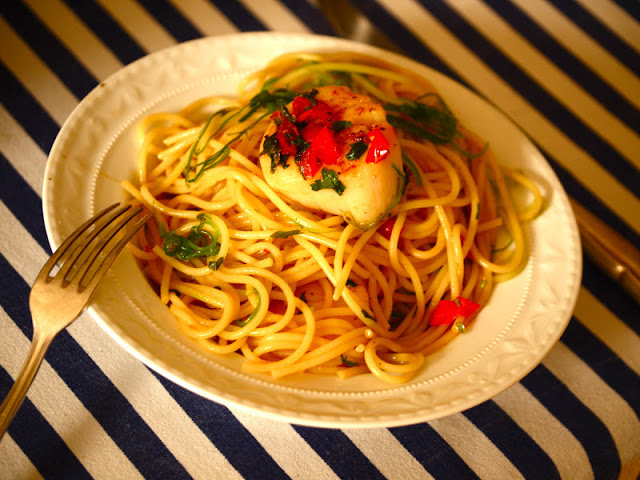
This time I brought a couple of coquilles St. Jacques and a little box of emerald green seaweed salad from downtown Dresden.
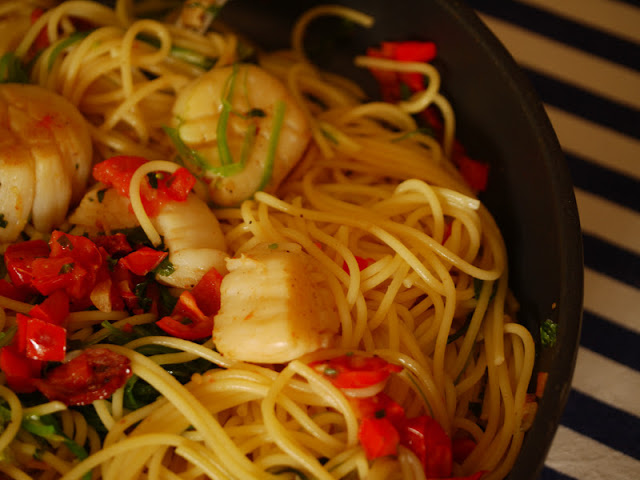
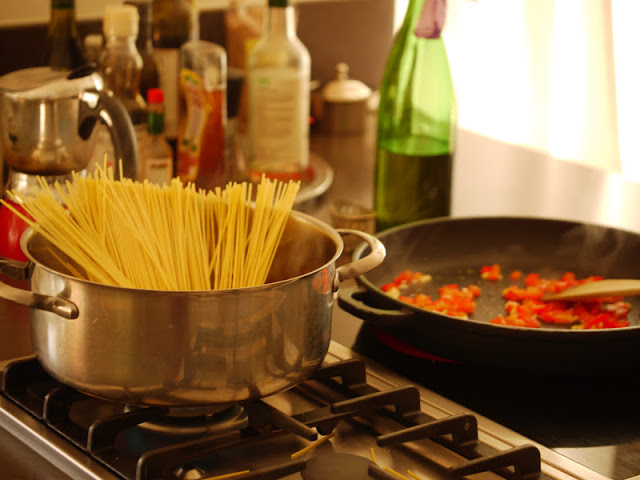
As my family is very fond of pasta I created a quick spaghettini lunch with the coquilles and the seaweed.

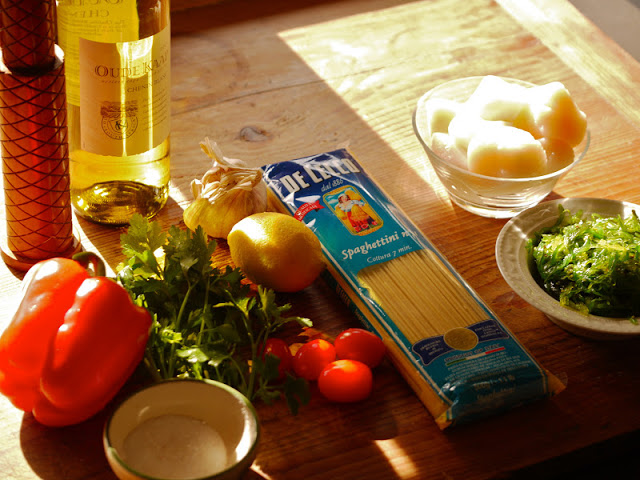
These are the ingredients:

For the sauce

olive oil
1 red bell pepper, chopped
a handful of baby tomatoes, quartered
a bunch of parsley
2 or 3 cloves of garlic, finely sliced
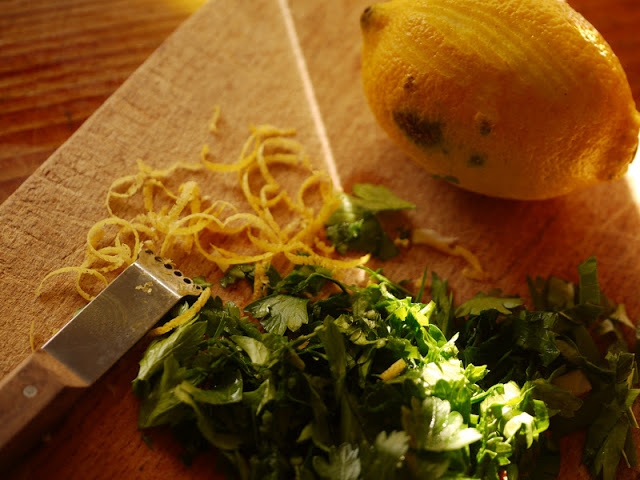
the zest of half a lemon
10 coquilles St. Jacques
a small box of Asian seaweed salad
a glass of white wine
salt and pepper, and
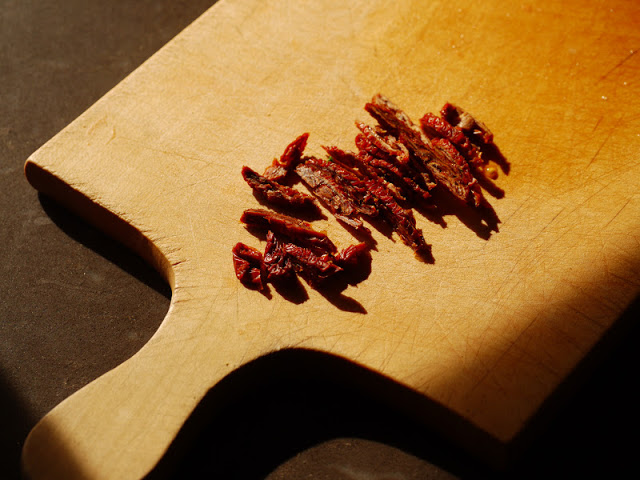
2 or 3 sun dried tomatoes to intensify the flavour.

Cook the spaghettini:

From now you have exactly 7 minutes to prepare the sauce – (Haha, of course you are allowed to start with the sauce before you cook the spaghettini… )

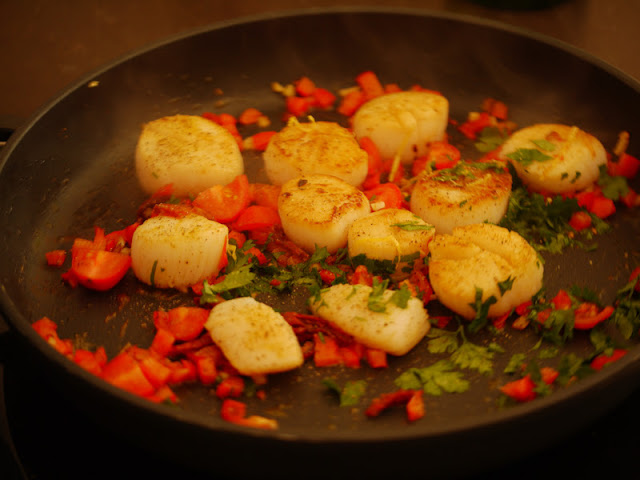
Start stir-frying the bell pepper, the garlic and the tomatoes, then add the coquilles. When the coquilles are nearly done, add the stripes of lemon zest and the chopped parsley. Continue stir-frying at low heat.


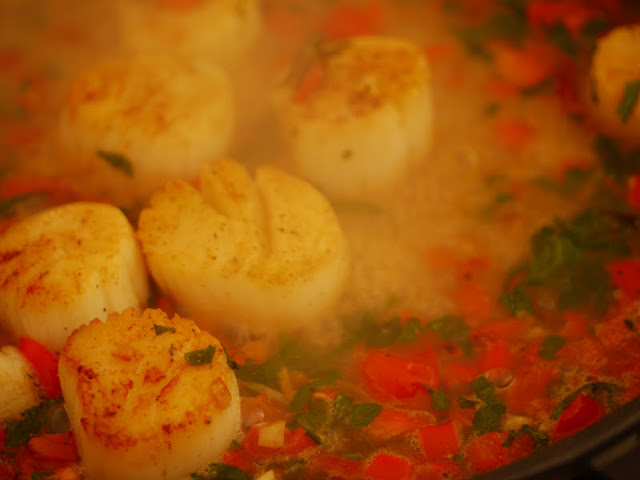
The moment your kitchen starts to smell like heaven and you hardly can refrain from eating the coquilles right off the pan, it’s time to pour in the wine. If one glass doesn’t seem to be enough, add more.
Let it reduce for a few minutes, then mix in the spaghettini and in the very last moment before serving add the seaweed.
Lunch is ready!

Liqueur de noix 2012

comment 1
Drinks / Jams + Preserves / Sweets

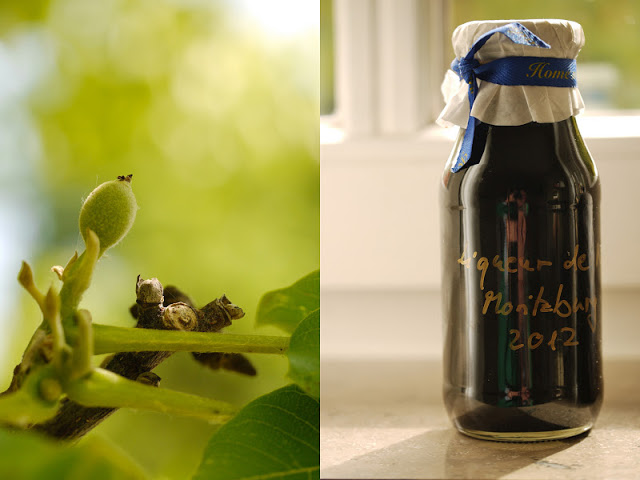
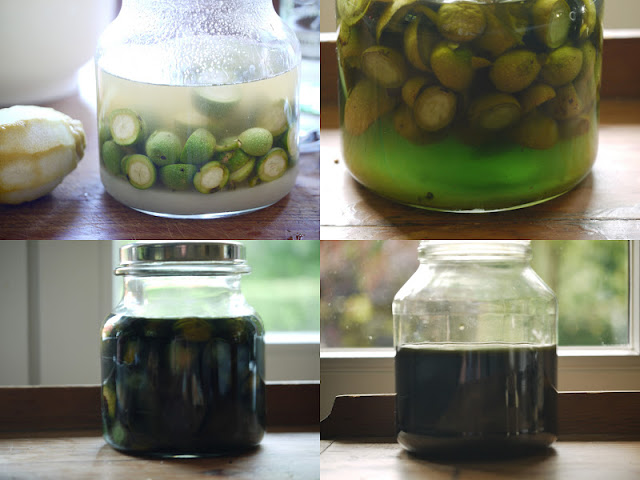
My green walnut liqueur experiment finished and bottled!

Of course I gave it to taste to all my friends who passed by. Here is a short collection of their judgements:

  • could be sweeter!
  • is this meant to be a medicine or just for fun?
  • nice for Tiramisu with a touch of nut
  • a bit rough, has it any healing effect?
  • perfect with vanilla ice cream
  • next year you should make more of those little bottles

You see, David Lebovitz’s recipe didn’t turn out too bad. My own opinion? I loved it with chocolate and vanilla ice cream. And surprisingly, with the creamy quince sauce I had prepared at my mother’s home.

Green smoothie fever

Leave a comment
Drinks

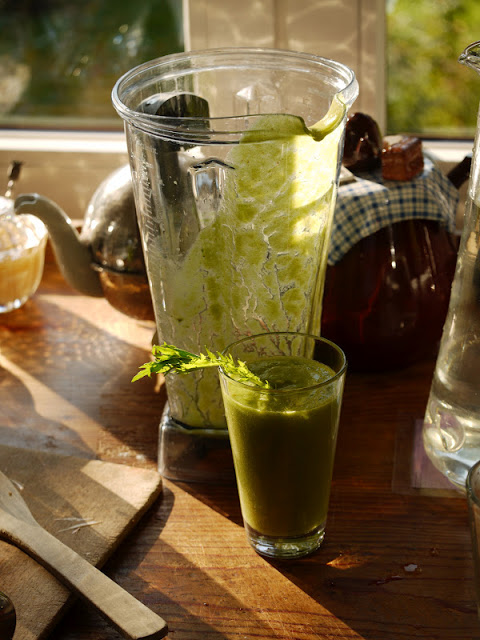
I’ve recently been hooked on the green smoothie fever, all thanks to Victoria Boutenko and her two books “Green for life” and “Green Smoothie”.  Here is my own little introduction to the power juice and detox wonder:

Green smoothies typically contain at least 1 cup of water, leafy green vegetables and fruit, and often small amounts of secret power foods. The green smoothie can be served as breakfast, lunch or dinner because it is so wholesome and filling. It supplies the body with everything it needs ( = energy, minerals, and water) in it’s purest form. Therefore it is the perfect detox food.

How to make a green smoothie:

First of all you need a blender, but not just any blender!! You need a blender with at least 1000watts, otherwise your smoothie won’t be smooth. I have a “Vitamix” but any brand should do the trick.
To get started you could find recipes in Vicoria Boutenko’s books or her website, randomly on the internet or you start experimenting straightaway using my list of ingredients.

greens:

  • swiss chard
  • collard greens
  • parsley
  • kale
  • romaine lettuce
  • carrot green
  • beetroot green
  • spinach

fruit:

  • banana
  • apple
  • orange
  • coconut
  • pineapple
  • mango
  • melon
  • strawberries
  • raspberries
  • blueberries
  • dates or agave syrup for additional sweetness

power foods:

  • chia seeds and psyllium seeds (rich in minerals and amino acids and for a pudding-like consistency)
  • ground flaxseed (nutty flavour and creamy consistency)
  • aloe vera juice
  • wheatgrass juice
  • coconut water


My current favourite recipe is:
1 bunch of swiss chards
1 apple
1 banana
1 cup of coconut water
1 cup of water

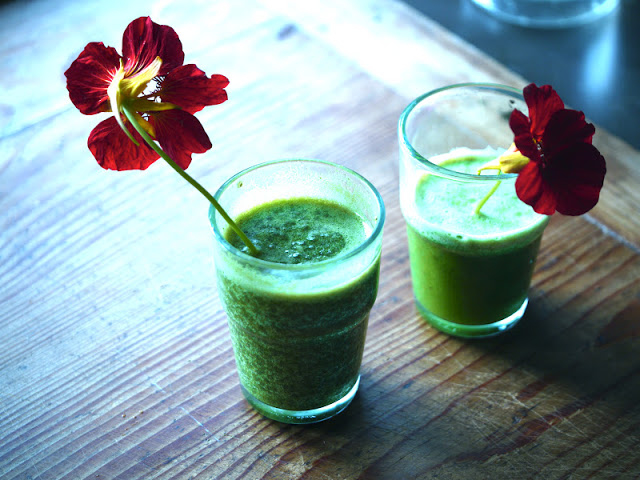
(On the left side of the photo with chia seeds, on the right side without).

I’d love to know which recipe is your favourite!


Making Scones

comment 1
Cakes + Cookies / Sweets

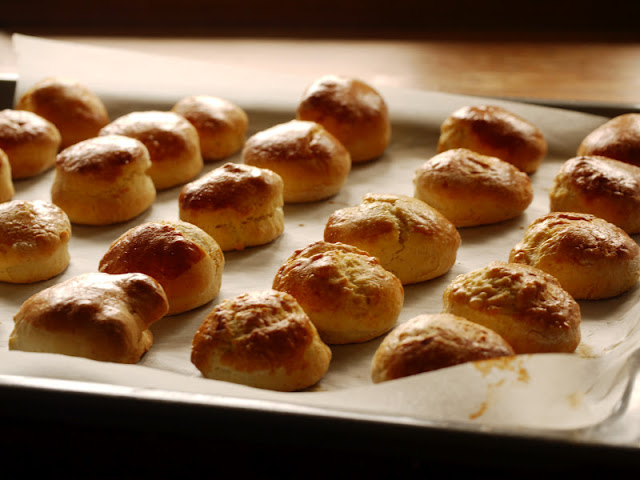
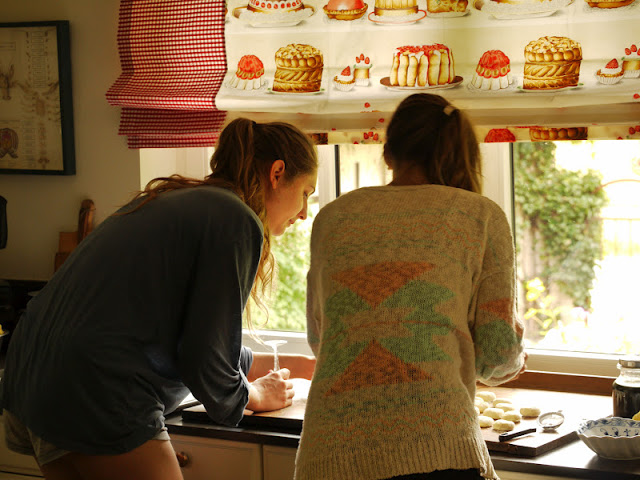
Another recipe from the famous Rose Bakery in Paris! For quite a while I have fancied Rose’s maple syrup scones. When my daughter and our friend Lenka felt like trying out some new recipes for a tea party I seized my opportunity and suggested the scones. Equipped with the BREAKFAST-LUNCH-TEA cookbook and all the necessary ingredients and tools, making scones for the first time went very smooth.

Rose Carrarini doesn’t exaggerate saying that these scones smell like heaven when they just come out of the oven! They are soft and light and warm and taste great with any topping (even tomato paste, as I discovered the next day).


Maple syrup scones

260g (1 3/4 cups) plain flour
80g (1/2 cup) wholewheat flour
13g (1/2 cup) rolled oats
1 very heaped tablespoon baking powder
1 very heaped tablespoon sugar
1/2 teaspoon salt
160g (3/4 cup) butter, cut into pieces, plus extra for greasing
4 tablespoons maple syrup
about 4 tablespoons milk
1 egg, beaten

Preheat oven to 200°C (400°F) and grease a baking tray with butter.

Sift the plain and wholewheat flours into a bowl and mix in the oats, baking powder, sugar and salt.

Add the butter and rub in wit your fingers until the mixture resembles fresh breadcrumbs.

In another bowl, mix together the syrup and 4 tablespoons milk.

Make a well in the middle of the flours and oats and pour in the syrup and milk mixture. Use a fork to work it into the dry ingredients. Finish by hand: just lightly bring everything together to form a firm but softish dough. It must not be sticky at all.

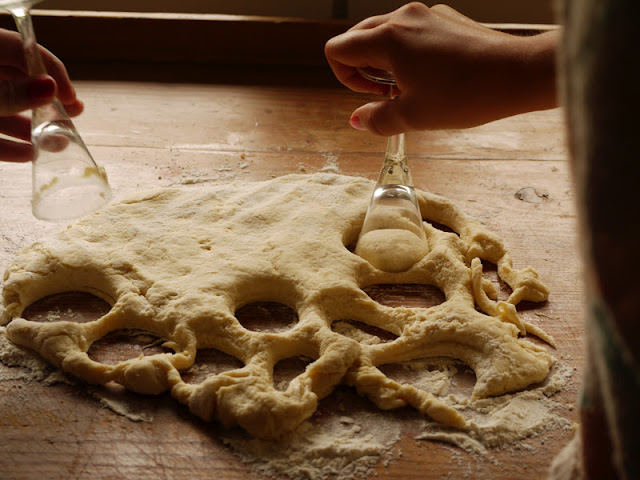
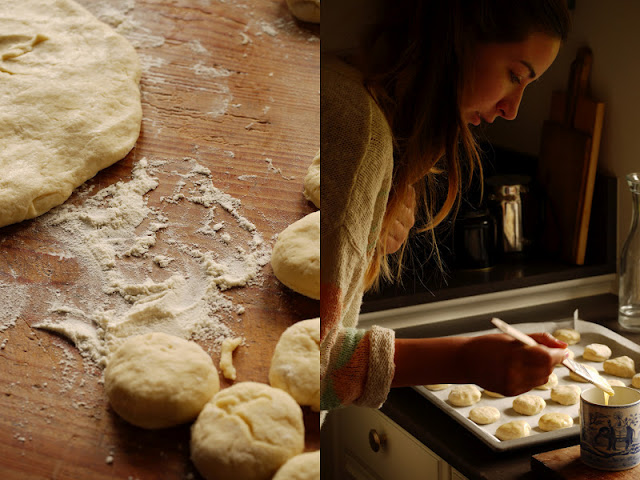
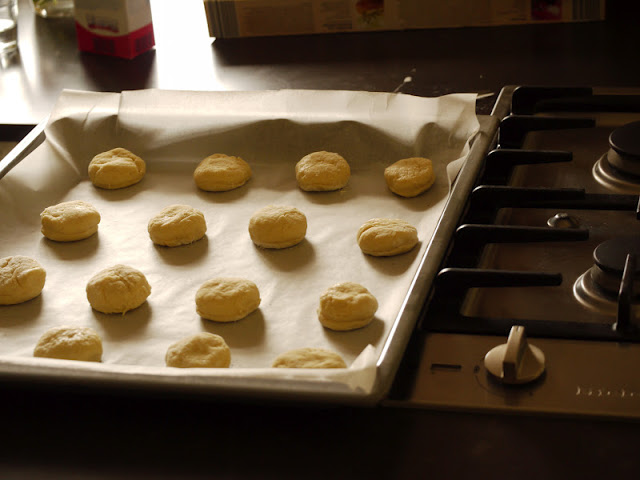
On a lightly floured surface, pat or roll the dough into a solid shape about 3 cm thick. Using a 5cm cutter (or a shot glass) cut the dough into rounds and place them on a greased baking tray.

Glaze the tops with the beaten egg, and bake for 20-25 minutes until lightly golden.

Enjoy!


Contemporary Art – Homegrown

Leave a comment
Uncategorized


Every year for 2 months the Ostrale invites national and international artists  to take part in a remarkable event at a historical site. The Hans-Erlwein-slaughterhouse offers 15.000 m² exhibition space and an outdoor area more than three times larger. You hardly encounter other visitors and especially a grey sky adds to the post-apocalyptic atmosphere, that creeps upon me in the old halls.
With the issue “homegrown” the OSTRALE/ 012 is dedicated to the self-cultivated or self-grown and is principally asking for localizing creative impetuses in a spatial, temporal and cultural context.

Focus of attention is the relationship between tradition and innovation.


There were  works that really stood out to me. I will just post a very small selection.


Heinz Bert Dreckmann, City


Fabian von Spreckelsen, Trophy Marlin, Elephant and Deer


Sybille Walenciak, work in progress


Nikola Dicke, Tapisserie


Maria Trialoni, Retrospective Re-statements


Michael Wahrenberg, Die Türe zum Erfolg


See you at OSTRALE/ 013!