Last time I went to London, I stayed in the heart of Shoreditch. It must be one of my favourite places because the streets are so rich in beautiful and interesting art, and the atmosphere is laid back and effortless in contrast to some other areas of the city. I could not walk past without taking a few pictures… after all London streets are famous for being canvas for artists like Roa, Eine, Stik and Banksy.
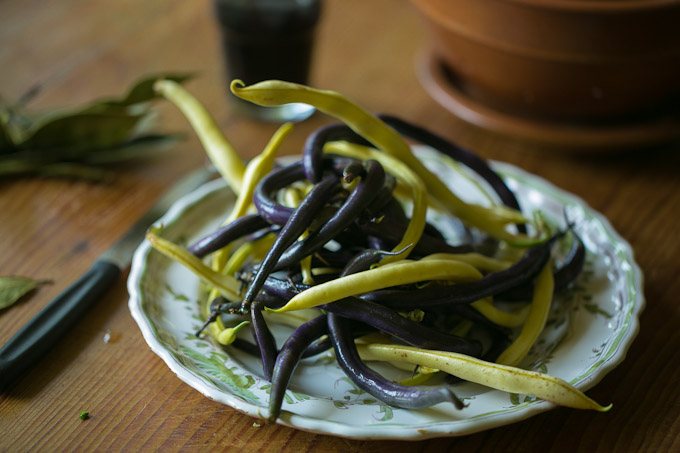
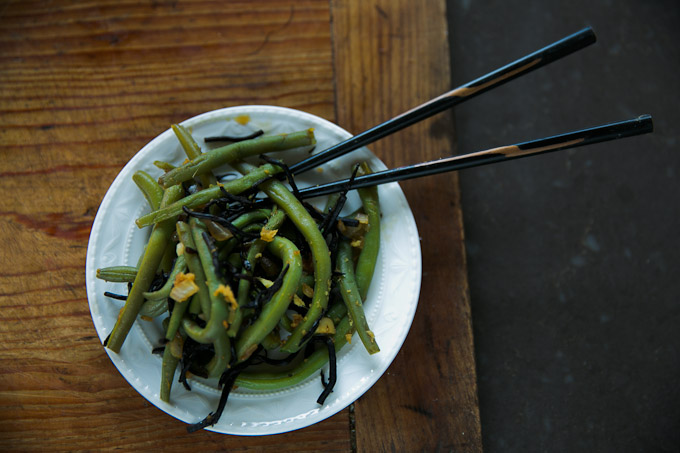
My international family of favourite green bean recipes (German with tomatoes, onions and vinaigrette, Spanish with fried garlic and almonds) welcomes a new brother in their midst: Asian gingered beans with hijiki.
This recipe is full of flavour and makes use of the beautiful hijiki algae, and fancy yet very easy to prepare.
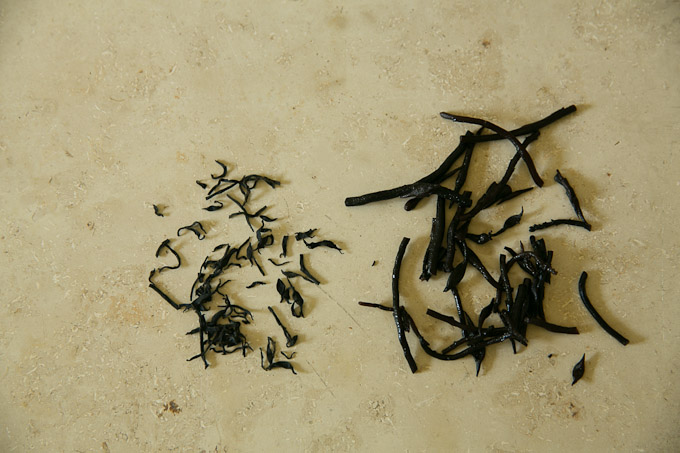
dry and soaked hijiki
gingered beans with hijiki (inspired by Alicia Silverstone)
1/2 cup dried hijiki
1 tablespoon tamari
2 tablespoons olive oil
1/2 cup onions, chopped
1 tablespoon finely chopped garlic
pinch of sea salt
2 cups fresh geen beans
2 tablespoons grated ginger
Place the hijiki in a small bowl with hot water. Let it soak for about 30 minutes, then drain and rinse.
Combine the hijiki with the tamari, add waterto almost cover in a saucepan.Cook, uncovered over medium heat until the water has nearly evaporated.
While the hijiki cooks, heat the oil, add onion, garlicand salt and sauté for about 4 minutes, or until translucent. Add the green beans. Cover and cook until the beans are tender-crisp, about 5 minutes.
Add the hijiki and ginger.
Mix well and cook for 1 to 2 minutes longer to marry the flavours.
Michael Simonsen, of Simonsen Freianlagen, the landscape designer and family friend, has a beautiful garden, that we were very eager to visit. Whenever we asked, “can we come see your garden this weekend?” He said “No no noooo, it needs a little more time to show the whole variety of flowers! Half of them didn’t blossom yet!” or “Just a little more patience, I am still waiting for the sunflowers!”
Finally, on a sunny day towards the end of August, we decided “now or never” and called Michael to tell him the day of our visit had come, and that we didn’t want to wait for the sunflowers any longer.
<
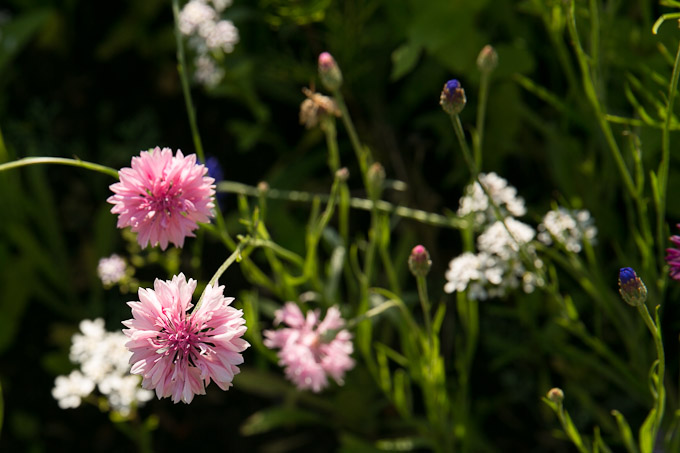
The walk through the meadows was delightful; we saw a real-life deer and some of the flowers smelled like honey.
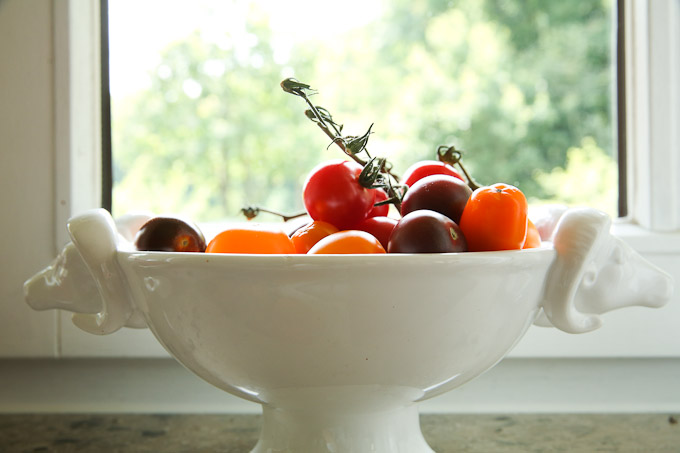
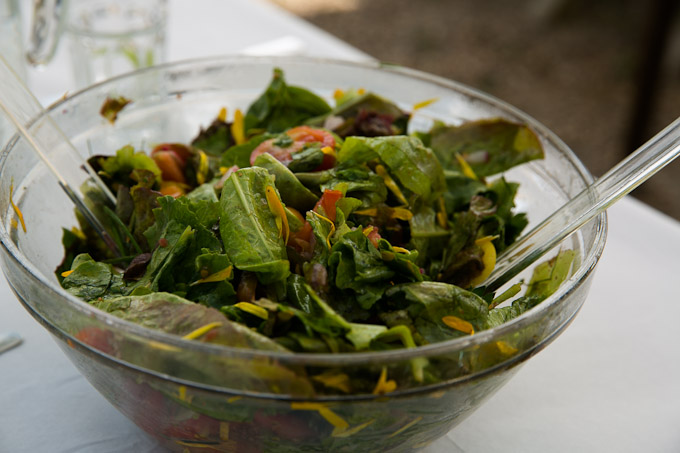
For lunch Michael sent us off to the vegetable patch in the beautiful kitchen garden equipped with a washing basket to pick our ingredients. Warty cucumbers, the most differently shaped and coloured tomatoes and little leafy greens and herbs made a wonderful salad.
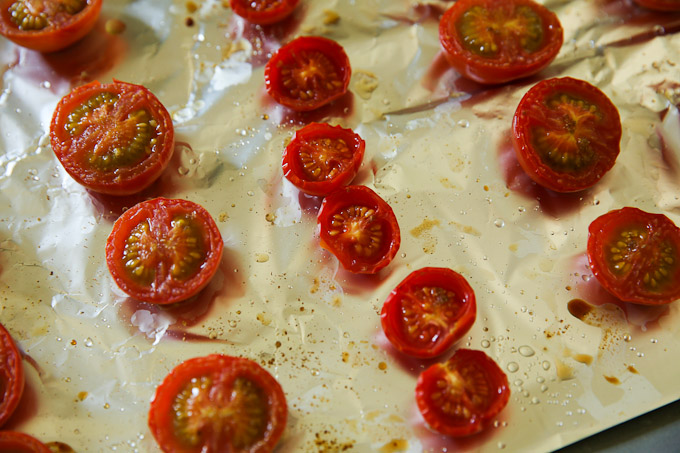
Every now and then the overnight tomatoes make their appearance on various food blogs I follow. They have many fancy names like night blushed tomatoes or moon dried tomatoes, but I think the flavour speaks for itself. When I talked with my local vegetable shopkeeper about the many possibilities to enjoy the little heirloom tomatoes I remembered the overnight method and promised to share it with him.
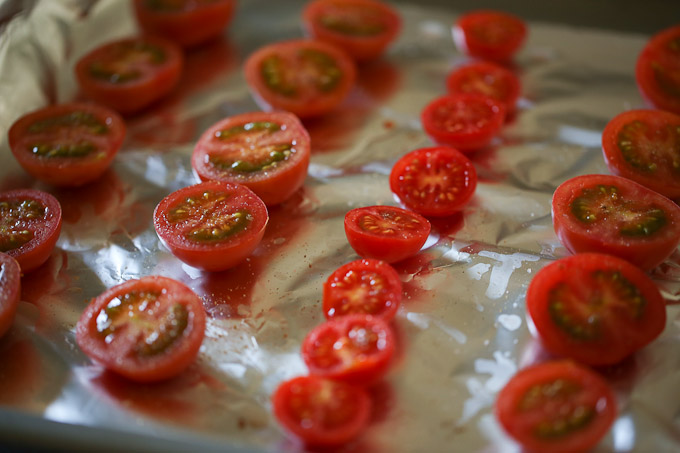
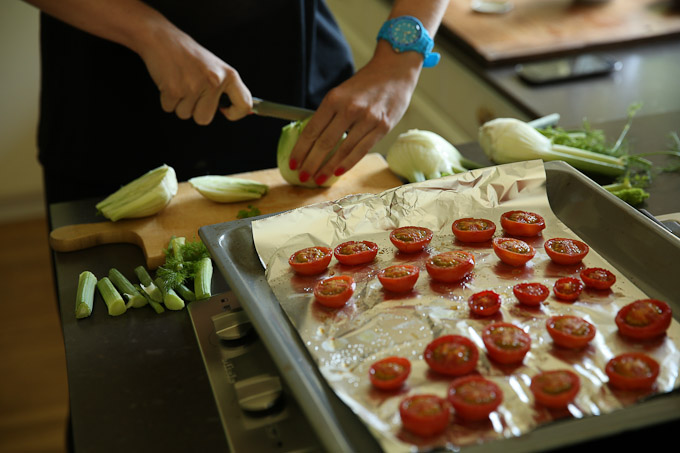
It’s super easy and the result is irresistible. While you heat your oven up to the maximum (250°C), you cut the tomatoes in halves, put them on a baking tray and season them to your liking.
I love to sprinkle them with salt, brown sugar (or maple syrup) and a bit of ground caraway. That’s it.
The moment you put the tomatoes in the oven you turn off the heat and go to bed.
When you open the oven the next morning, you’ll find the most sweet, tasty, semi-dried, wonderful, delicious tomatoes you hardly can contain yourself from eating them right from the tray.
The tiny tomatoes of the middle row didn’t survive until we had prepared the rest of the lunch (the smaller the tomatoes the better for the overnight method!)
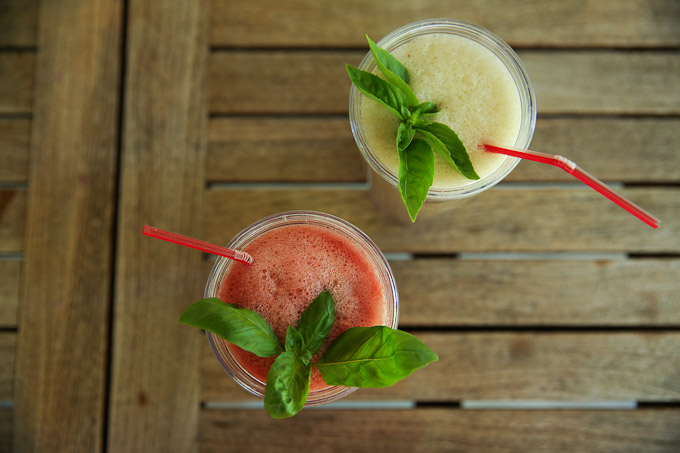
Smoothies make a great breakfast (and if you like, you can continue drinking them all day). They replenish your cells with water, minerals and natural sugars! Here a few tips, to make your smoothie experience very enjoyable!!
1. Melon should always be the first meal of the day (never in between other meals) and in a smoothie also best just by itself. The reason why it doesn’t mix well, is, that is has a very high water content, and digests very fast. So if you ate something more dense before, it may cause bloating or even stomach cramps.
2. Smoothies (for the exact same reason) make a great first meal (and also second and third…) but don’t go well after a denser meal. As a general rule of thumb, try to eat foods that are digest faster (high water content = fresh fruit and vegetables, smoothies) first and earlier in the day, and foods that digest slower (less water content = cooked or baked foods) later, or in the evening.
3. Good raw food combinations (apply also for smoothies!):
Greens go with everything
Melon goes by itself
Very sweet fruits (bananas, dates, figs, persimmon,..) go well together and with greens
Semi sour fruits (all fruits with stones and berries, some apples) go well together and with greens and some sour fruits
Sour fruits (citrus fruits and tomatoes, pineapple, some apples) go well together and with greens, and with fats (avocados, nuts, flaxseed, coconut) and with some semi sour fruits
Fats don’t mix well within their own group, but go with sour fruits and greens
These combination guidelines shouldn’t limit you in any way! In fact many many raw food and smoothie recipes break these rules (for example combining fat with sweet fruits, or fat with other fat) and create absolutely delicious treats. Just if you aim to include a lot of raw fruits and veggies in your diet, paying attention to the combinations is gonna safe you a lot of bloating and stomach pains, I promise!
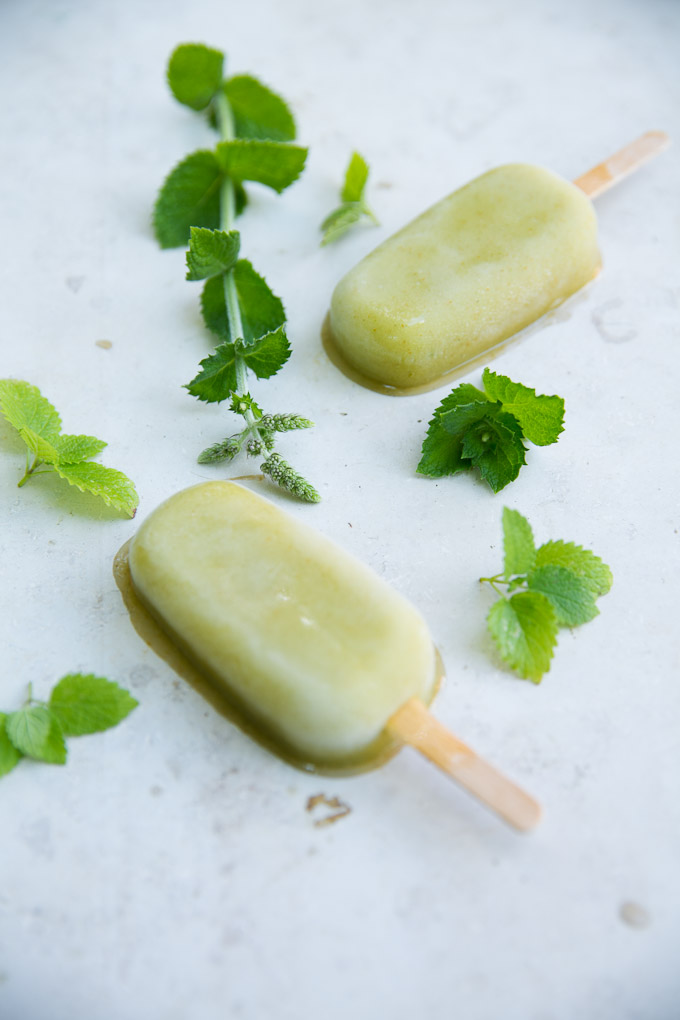
1 ripe pear
1 ripe banana
1 freshly squeezed orange
1 freshly squeezed lemon
100ml coconut water (or just water)
a few sprigs of lemon balm
3-4 mint leaves
a pinch of dried lemon myrtle
Blend. Fill into the moulds. Freeze. Enjoy!
Manage Cookie Consent
To provide the best experiences, we use technologies like cookies to store and/or access device information. Consenting to these technologies will allow us to process data such as browsing behaviour or unique IDs on this site. Not consenting or withdrawing consent, may adversely affect certain features and functions.
Functional
Always active
The technical storage or access is strictly necessary for the legitimate purpose of enabling the use of a specific service explicitly requested by the subscriber or user, or for the sole purpose of carrying out the transmission of a communication over an electronic communications network.
Preferences
The technical storage or access is necessary for the legitimate purpose of storing preferences that are not requested by the subscriber or user.
Statistics
The technical storage or access that is used exclusively for statistical purposes.The technical storage or access that is used exclusively for anonymous statistical purposes. Without a subpoena, voluntary compliance on the part of your Internet Service Provider, or additional records from a third party, information stored or retrieved for this purpose alone cannot usually be used to identify you.
Marketing
The technical storage or access is required to create user profiles to send advertising, or to track the user on a website or across several websites for similar marketing purposes.
























 <
<