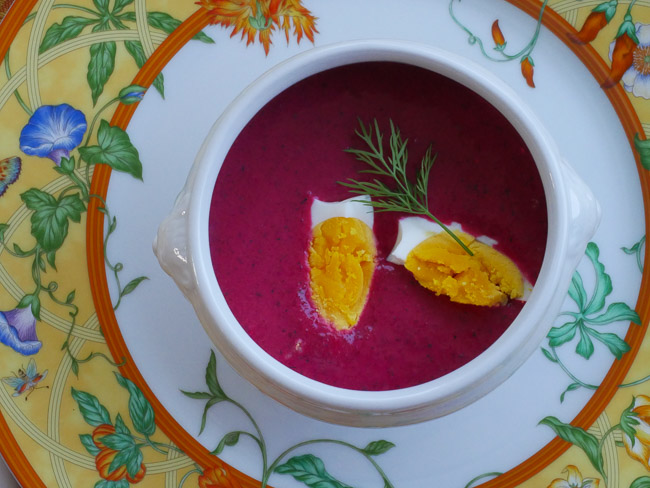
The remedy for the summer’s heat came to me from the Baltic countries: an earthy, slightly sour, chilled red beet soup. Sophie from Café Goldfisch introduced me to it, hers in a striking baby pink shade, mine a bit more on the magenta side. Anyway, as long as you use the traditional main ingredients red beet, gherkins, dill, spring onions and kefir (yoghurt, sour cream…) you can’t go wrong.
Baltic beet soup (yields 4)
ca. 600g red beets 750ml vegetable broth (or water) salt 4 eggs 250g gherkins 4 spring onions 1 bunch dill 1l Kefir (buttermilk, Sweden milk, yoghurt…to your liking) freshly ground black pepper 1 tablespoon white wine vinegar (to your liking)
Peel and chop the beets, cook them in the broth for about 20 minutes until soft. Let beets and broth cool completely.
In the meantime boil eggs until hard and set them aside.
Chop the gherkins, spring onions and the dill (leave some tips to decorate) and add to the beets. Blend to a gentle, velvety soup. Stir in the Kefir and enjoy the arising pinkness!
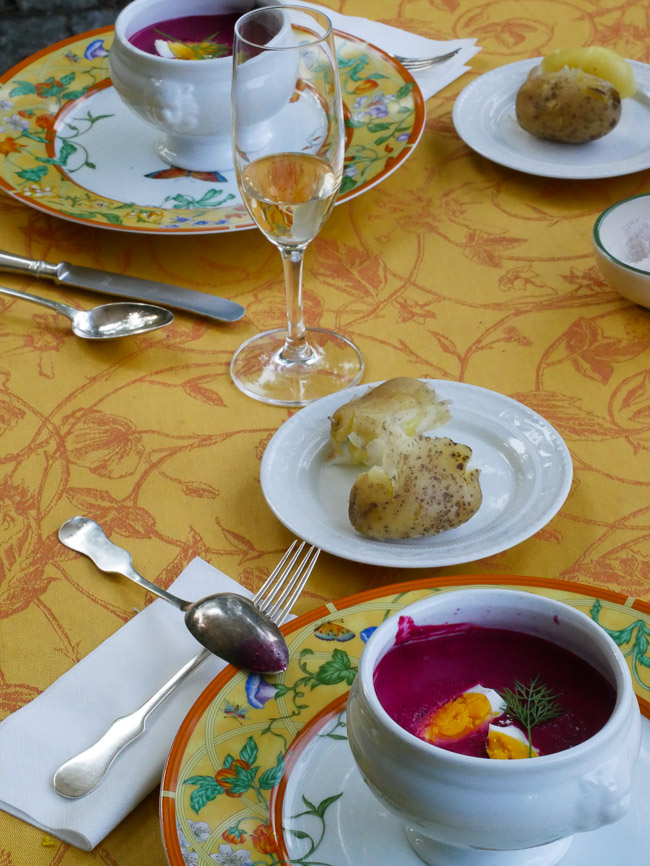
Serve with quarters of hard-boiled egg , a sprig of dill and -if you like- some hot boiled potatoes on a separate plate.
Best the next day, when the flavours had time to melt
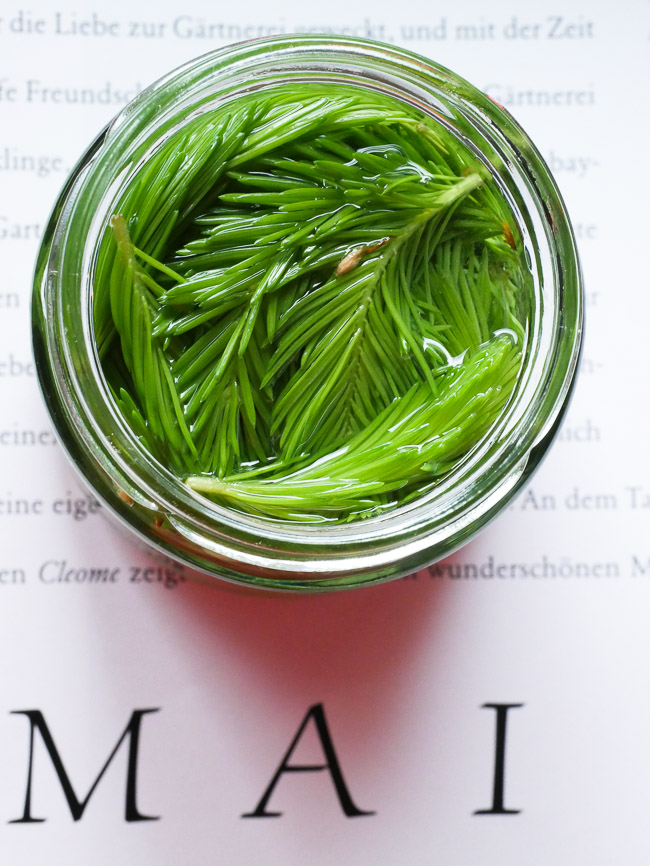
Im letzten Jahr habe ich Maitriebe von Tannen, Kiefern und Fichten gesammelt, Rezepte gelesen und experimentiert. Ich habe sie frisch gehackt auf Butterbrot probiert, daraus Kräuterbutter mit Zitronenabrieb hergestellt, sie für Tee und Wildgerichte getrocknet und in Gin eingelegt. Die Triebe von der Fichte fand ich im Vergleich zu den anderen Nadelbäumen mit Abstand am würzigsten. Ihr Aroma ist frisch, ganz fein fichtennadelig und ein wenig zitrusartig. Und sie sind ganz weich und zart.
Fichtenspitzen in Gin
In Gin marinierte Fichtenspitzen sind eine Delikatesse, die besonders gut zu sahnigem Vanilleeis oder selbstgemachtem Beereneis schmeckt.
Fichtenspitzen zum Trocknen ausgelegt
Getrocknete Fichtenspitzen
Fichtenspitzen gemischt mit ein paar Blättern Brennessel und Waldmeister, übergossen mit heißem Wasser , ergeben einen würzig-waldigen Tee.
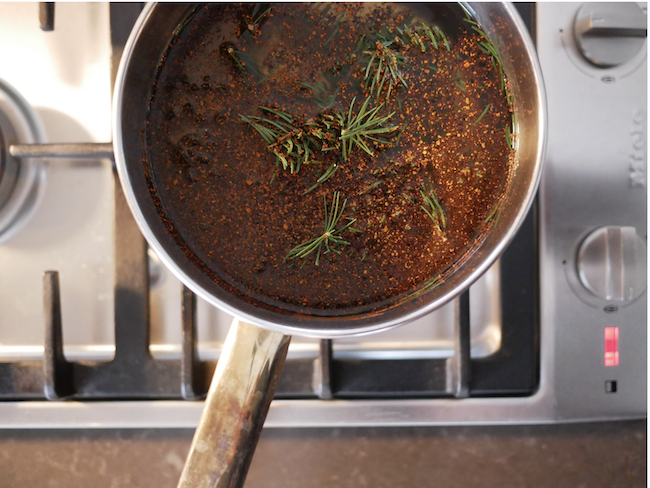
Fichtenspitzen, 5 Minuten in Wasser zusammen mit Chaga geköchelt, wärmen an kalten Wintertagen.
Ich verwende die Fichtenspitzen auch gern im Schmorsud, wenn ich Wild zubereite.
Chaga und Fichte
Fichtensahne
1 Handvoll Fichtenspitzen 1 kleine Prise Salz 1 EL Honig 1 EL frisch gepresster Orangensaft 2 TL gerieben Nüsse 200g Schlagsahne
Püriere alle Zutaten mit einem Pürierstab bis eine feine grüne Masse entsteht. Köstlich über Vanilleeis und zu Erdbeerkuchen!
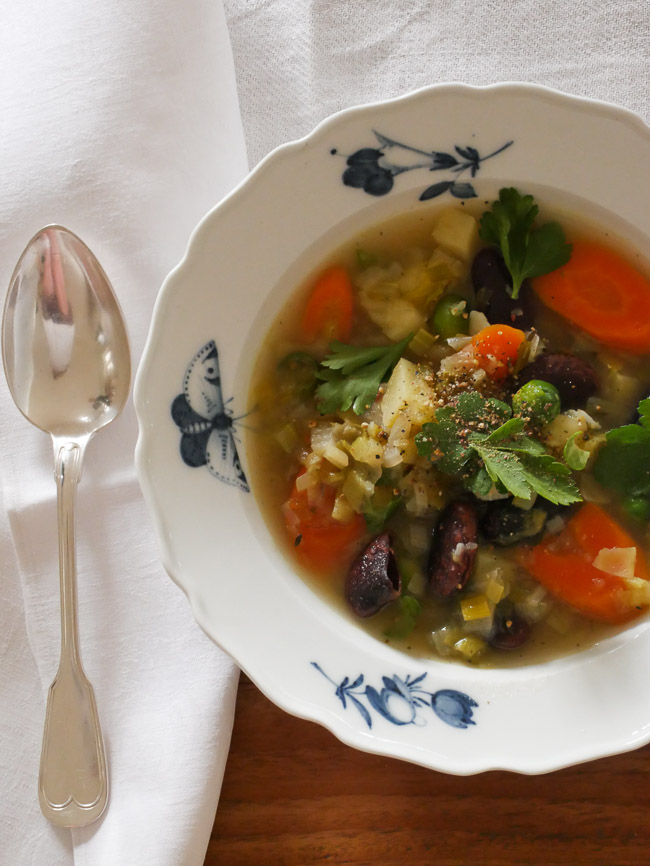
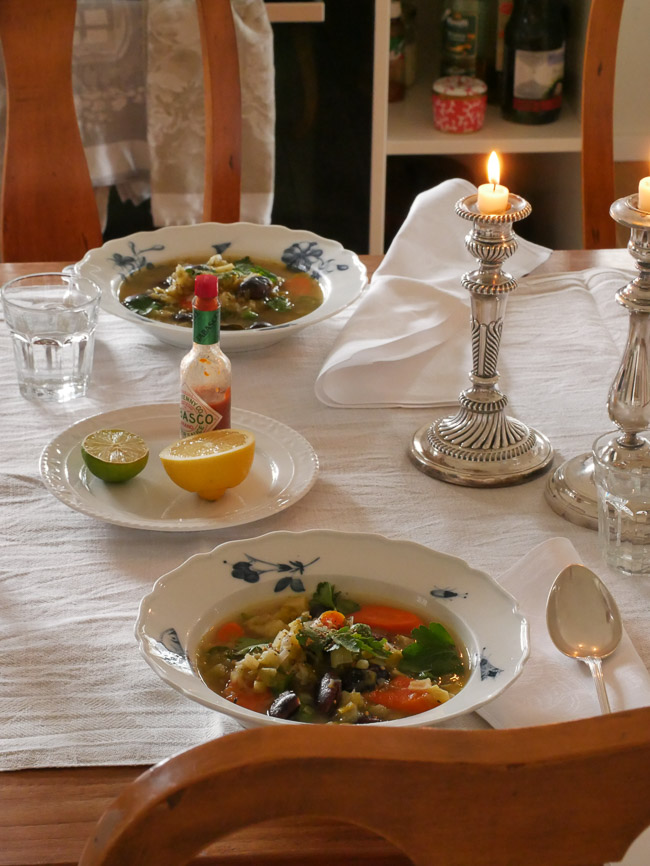
In our internal ranking system the giant bean soup unanimously scored a 10, which translates to 3 Michelin stars, 7 golden ladles or 5 chef’s hats. The combination of veggies and beans results in a humble yet luxurious comfort food.
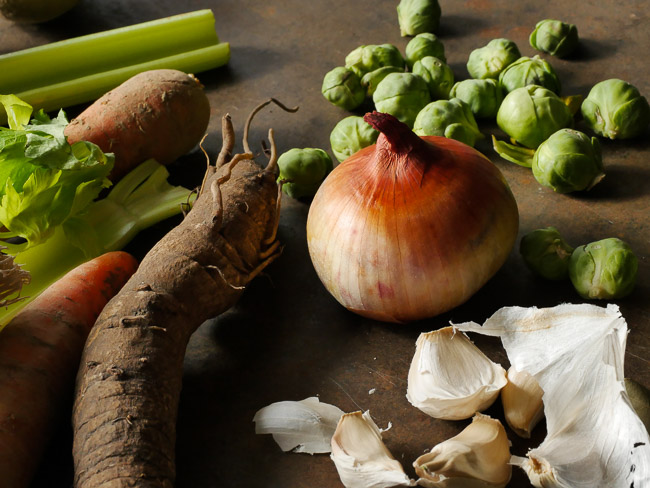
Root vegetables, especially burdock root, are very strengthening and make for a warming winter dish, much needed in the cold month of March.
giant bean soup
Ingredients:
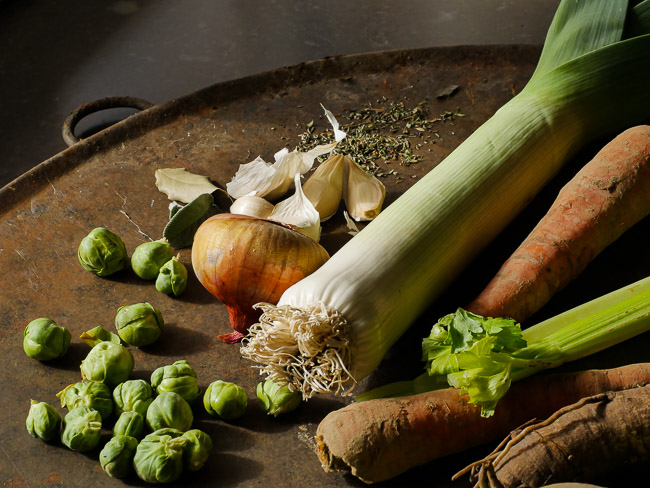
400g giant beans, canned 1 tablespoon olive oil 1 onion, chopped 1 leek, chopped 3 celery sticks, chopped 3 carrots (or 2 carrots and 1 burdock root), sliced 3 cloves of garlic, finely sliced 1 bay leaf 1 sage leaf 1 teaspoon dried thyme 2 potatoes a few leafy greens like kale, Brussels sprouts or Swiss chard 1 1/2l organic vegetable broth 1 splash of white wine parsley to garnish Tabasco, lemon and lime to season at the table
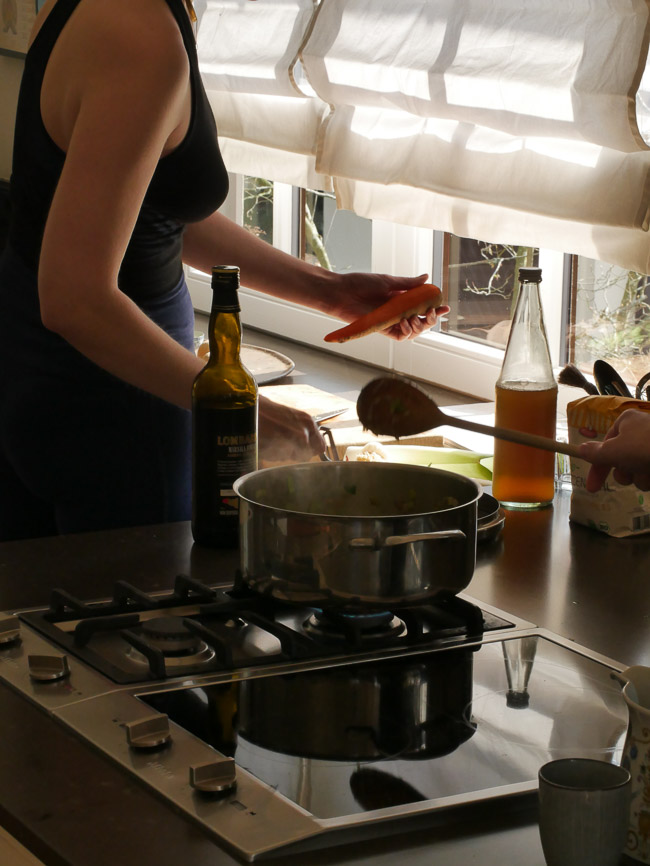
In a big pot heat the olive oil and fry the chopped onion. When the onion starts to brown add the leek, and after a few minutes, the celery. Continue frying the mixture for a few more minutes at a high temperature.
Add a splash of wine, the vegetable broth, thyme, sage, the bay leaf and finely sliced garlic. When the broth has heated up to a steady simmer, add potatoes, sliced carrot and burdock root. Then cover the pot with a lid.
After 10 minutes the potatoes and carrots should have softened enough so it’s time to add the giant beans and leafy greens. Put the lid back on just for a couple of minutes as not to overcook the greens, and then your soup is ready to serve!
Garnish with parsley leaves and some freshly ground black pepper, and if, like us, you enjoy seasoning some more at the table, a squeeze of lemon or lime and a few drops of tabasco are heavenly.
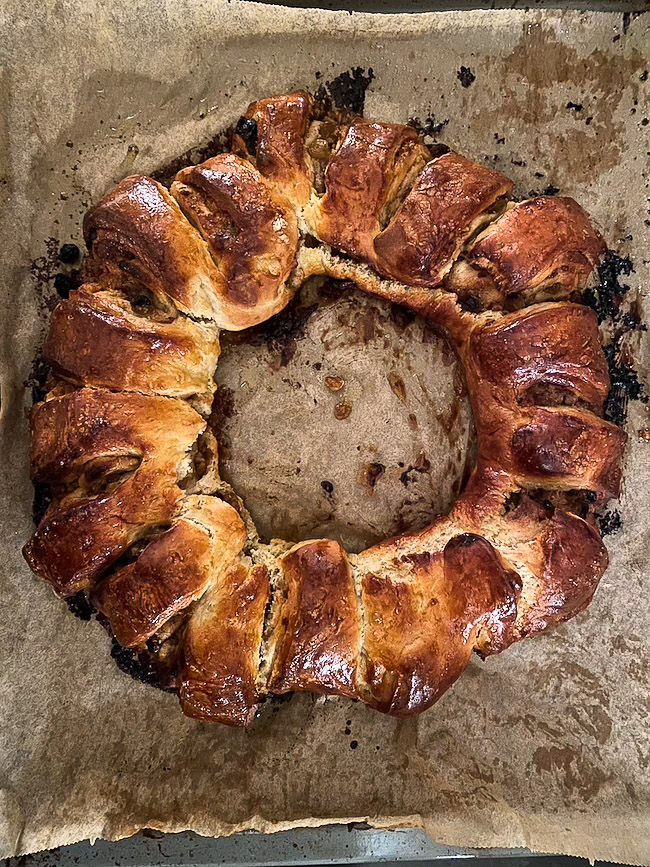
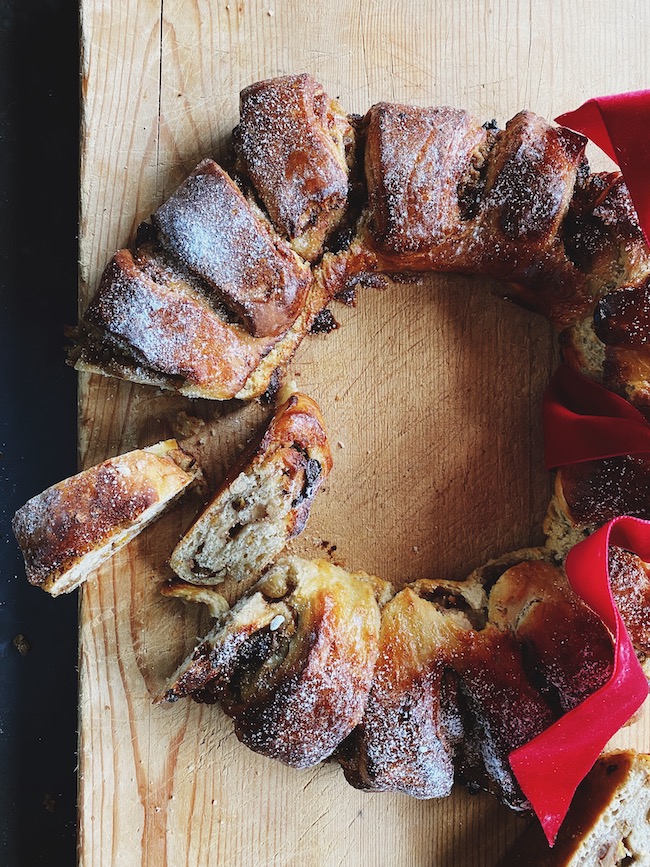
Christmas Wreath Bread (a slightly adapted recipe from Yvette van Boven, A Homemade Christmas)
For the dough: 250ml milk 50 butter(cubed) 450g flour 1 envelope active dry yeast 50g sugar 1/2 teaspoon sea salt
For the filling: 200g raisins ( soaked in rum) 50g chopped succade (crystallized fruit) 1 teaspoon ground cinnamon 1 teaspoon sweet spice mix zest and juice of 1 lemon 100g butter at room temperature 2 tablespoons light brown sugar 1 egg, lightly beaten
powdered sugar for serving
First make the dough. In a saucepan heat the milk until just below boiling, then add the butter and remove from heat. Allow to cool for 5 minutes, then add the yeast to the now lukewarm milk.
Combine the flour, sugar and salt in a large bowl and form an indentation in the center. Pour in the milk mixture. Using a wooden spoon, combine until the dough holds together. Continue kneading with your hands on lightly floured countertop for another 10 minutes. Shape into a ball, dust with flour, place in a bowl, cover and let rise in a warm spot for 90 minutes, or until it has doubled in volume.
For the filling mix the butter, brown sugar and the rest of the ingredients. Set aside.
Knead the dough briefly once more. On a lightly floured countertop roll it out into a rectangle. Spread the filling over it using a spatula. Allow a margin of about 2cm at the long sides.
Roll up the dough from a long side moisten the are edge with water and press to seal the seam. Place the roll with the seam facing down. Moisten the ends of the roll as well and bend them together, forming a circle. Place the wreath on a baking sheet lined with parchment paper.
With a sharp knife, cut into the roll every 3cm, almost all the way through, but not quite.Pull out each cut piece, exposing the sides and the spirals will forma circular fan of swirls. Cover with a clean dish towel and allow the wreath to rise again for about 45 minutes.
Preheat oven to 200°C. Brush the bread with the lightly beaten egg. Bake for about 30 minutes, until golden brown.
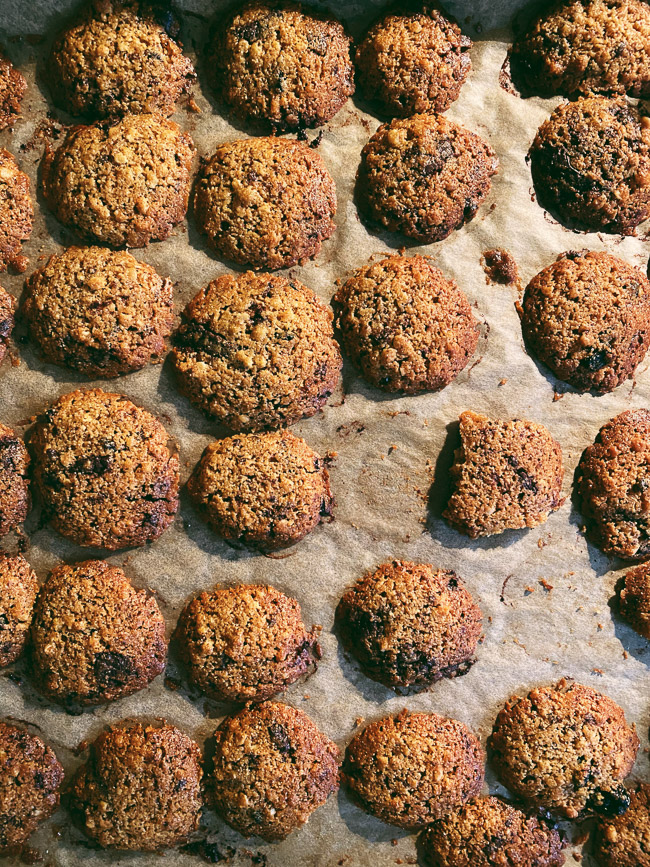
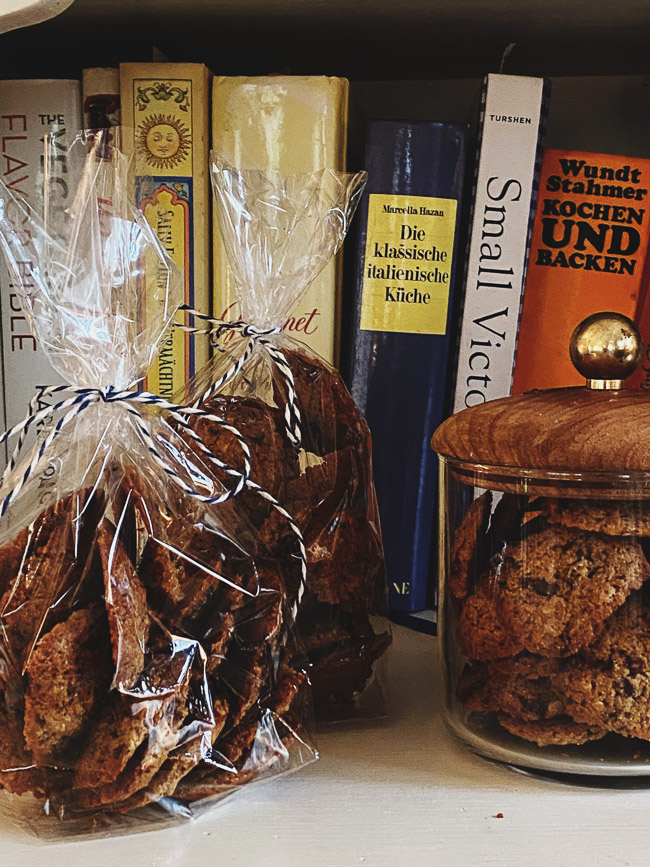
220g butter at room temperature 3/4 cup brown sugar 1/2 teaspoon vanilla powder 2 eggs a pinch of salt 1 1/2 cups flour 1 teaspoon baking powder 1 cup oat flakes 1/2 cup (90g) dark chocolate, chopped 1/2 dried cherries, chopped
Line two baking sheets with parchment paper and preheat oven to 180°C.
Beat together butter and brown sugar until light and creamy. Add the vanilla, eggs and salt. Stir in flour, baking powder, oats, chocolate chips and dried cherries until just combined.
Using a teaspoon drop mounds of the dough onto the prepared baking sheets. Bake the cookies until they are slightly browned. 10 minutes if you like them soft inside, 12-15 minutes if you prefer them darker and crispier.
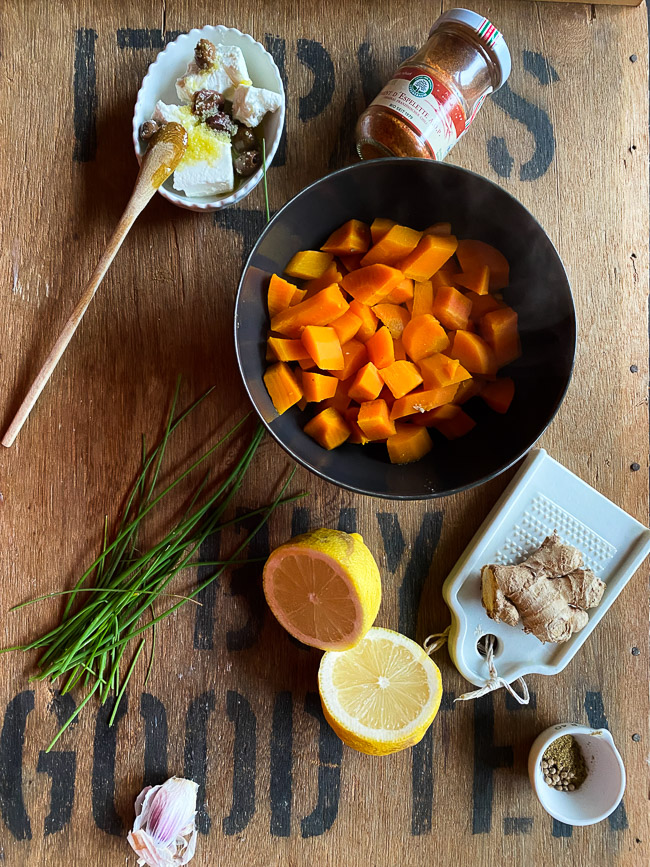
2 pounds carrots, peeled and cut into small pieces salt and pepper 1/2 teaspoon cumin 1/2 teaspoon ground coriander seeds 3 tablespoons lemon juice 1 clove garlic, smashed to a paste 1 teaspoon grated ginger a pinch of Piment d’Espelette 2 tablespoons olive oil 50-100g feta or ricotta, crumbled a handful of small black olives greens to decorate
Put the carrots in a pot of salted water, bring to a simmer and cook until tender, about 15 minutes. Drain. In the meantime make the vinaigrette. Put the lemon juice in a small bowl, and season with salt and pepper. Add cumin, coriander, garlic, ginger and Piment d’Espelette. Whisk in the olive oil.
Put the carrots, feta and olives in a bowl and dress with the vinaigrette. Sprinkle with greens.
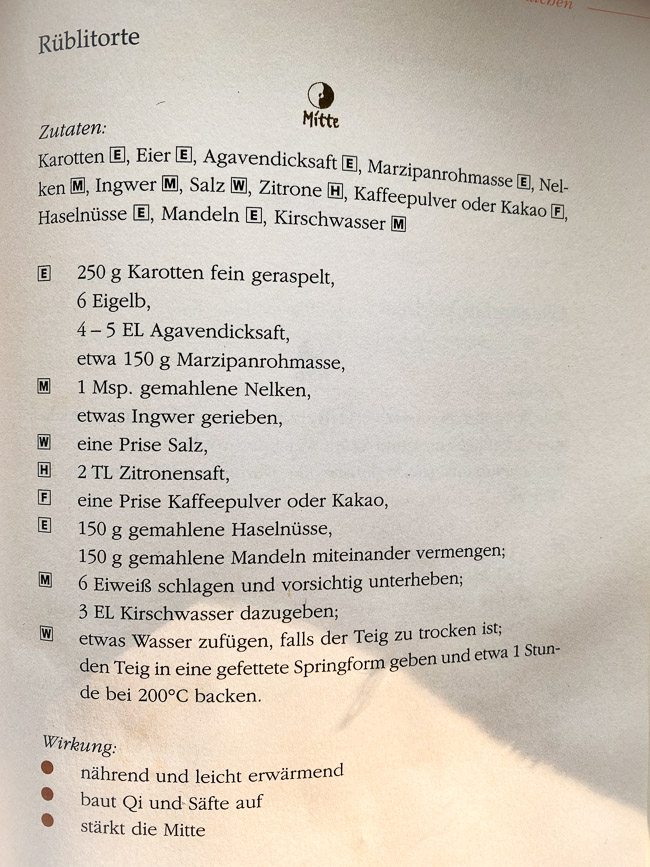
aus dem 5 Elemente Kochbuch von Barbara Temelie und Beatrice Trebuth
Die Rüblitorte schmeckt am besten, wenn man sie 2-3 Tage im Kühlschrank durchziehen lässt. Den Agavendicksaft habe ich durch 4 EL Ahornsirup ersetzt.
Die Backzeit hängt ein wenig von der Größe der verwendeten Backform ab. Für meine kleinen Guglhupfformen musste ich die im Rezept angegebene Backzeit um etwa die Hälfte reduzieren. Ich empfehle, je nach verwendeter Backform nach 30 Minuten nachzuschauen und die Rüblis aus dem Ofen zu holen, wenn sie schön gebräunt sind und verführerisch duften.
Die Buchstaben in den Kästchen stehen für die Elemente Erde, Metall, Wasser, Holz und Feuer.
… und wieder einmal sind wir in der Toscana und es gilt, für italienische Freunde zu kochen.
Diesmal ist die Herausforderung weniger die Skepsis ob unserer Kochkunst, nein, wir werden gebeten, nicht italienisch zu kochen und vor allem leicht. Man hatte einige schwere Essen in kürzester Vergangenheit genossen (nicht bei uns) und ein gewisses Verlangen nach leichterer Kost hatte sich eingestellt. Könnt ihr das? war die Frage unserer Freunde, die uns als begeisterte Köche von gehaltvollen Menüs kennen.
Was also kochen? Keine Pasta. Keine schweren Saucen. Kein Fleisch…. Fisch musste her.
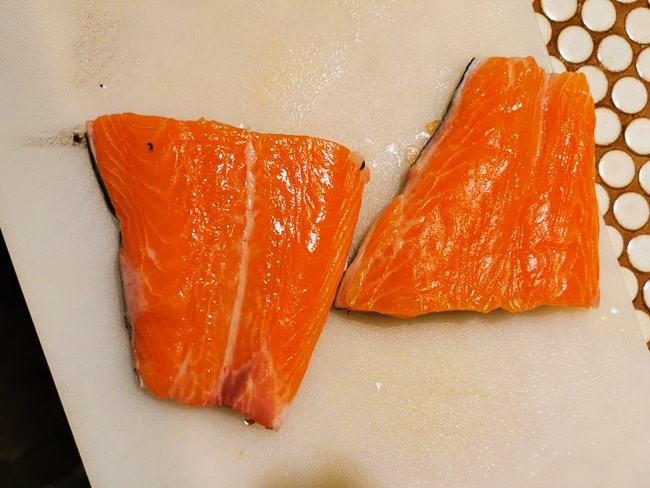
Also zum Fischhändler, der mit großer Geste aus der Lachsseite Filets auslöst. Schnell ist klar, es gibt Lachs im Pergament.
Salmone in pacchetto (für 4 Personen)
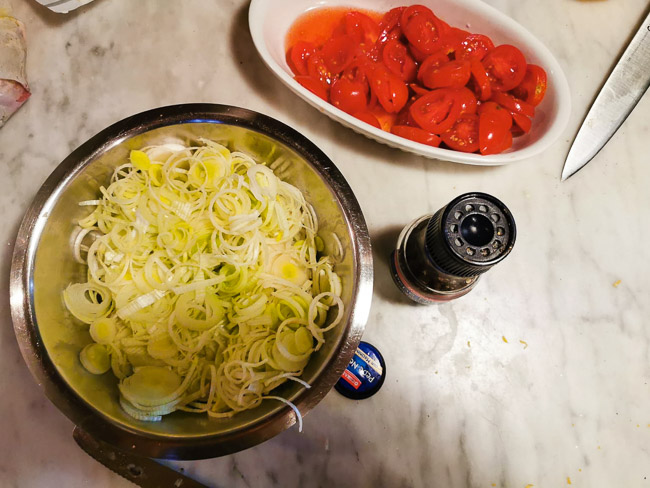
4 frische Lachsfilets 2 Handvoll kleine Datteltomaten, in Scheiben geschnitten 2 Stangen Porree, in schmale Ringe geschnitten (nur das Weiße und das sehr helle Grün) Zitronenabrieb Butter Meersalz und schwarzer Pfeffer helles Backpapier für die Säckchen und Küchengarn
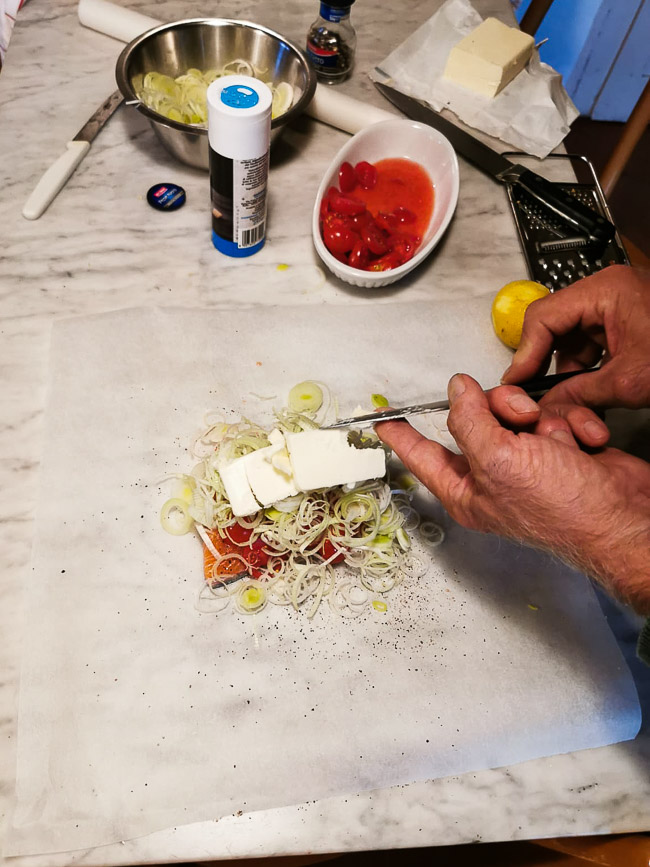
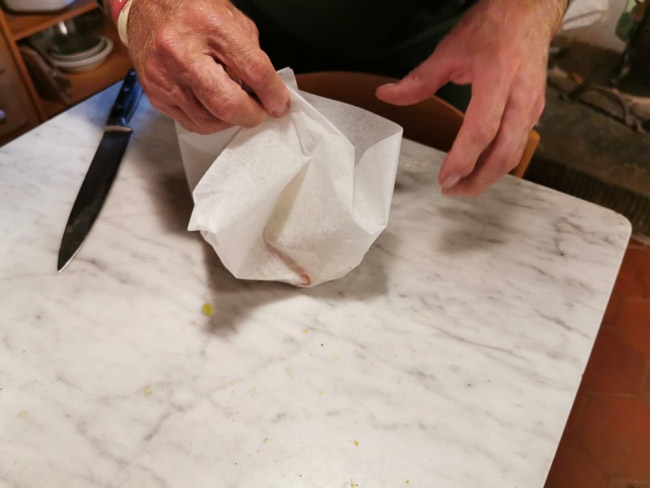
Den Lachs mit der Hautseite nach unten auf ein ausreichend großes Stück Backpapier legen, kräftig salzen und pfeffern, Tomaten und Porreescheiben auf den Fisch . Frischer Zitronenabrieb darüber geben und mit Butter krönen.
Das ist schon alles an Vorbereitung!
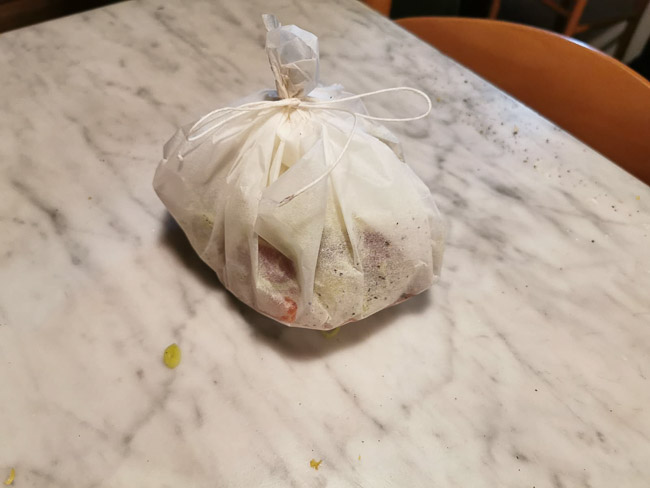
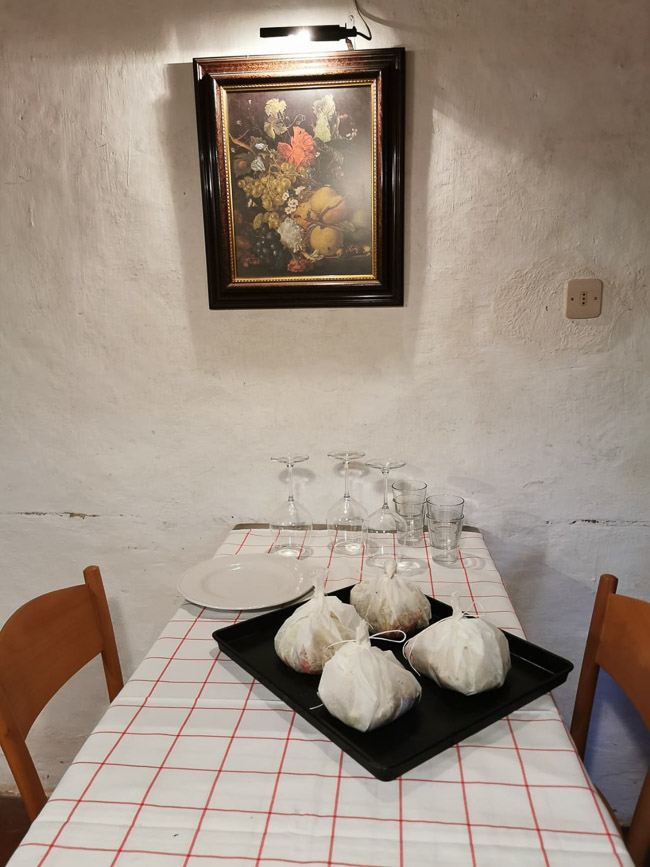
Mit Küchengarn fest zubinden, Backofen auf 180°C vorheizen. Wenn alle Säckchen präpariert sind, für 25 Minuten ab in den Ofen.
Jetzt bleibt genau die Zeit für einen kleinen Aperitif und ein bischen Antipasti.
Ich empfehle ein helles ungesalzenes Brot, um die Sauce aufzutunken und einen kleinen Salat. Weißwein ist natürlich ein Muss.
Eccolo! Und- was soll ich sagen – es war genau das Richtige für diesen Abend.
Manage Cookie Consent
To provide the best experiences, we use technologies like cookies to store and/or access device information. Consenting to these technologies will allow us to process data such as browsing behaviour or unique IDs on this site. Not consenting or withdrawing consent, may adversely affect certain features and functions.
Functional
Always active
The technical storage or access is strictly necessary for the legitimate purpose of enabling the use of a specific service explicitly requested by the subscriber or user, or for the sole purpose of carrying out the transmission of a communication over an electronic communications network.
Preferences
The technical storage or access is necessary for the legitimate purpose of storing preferences that are not requested by the subscriber or user.
Statistics
The technical storage or access that is used exclusively for statistical purposes.The technical storage or access that is used exclusively for anonymous statistical purposes. Without a subpoena, voluntary compliance on the part of your Internet Service Provider, or additional records from a third party, information stored or retrieved for this purpose alone cannot usually be used to identify you.
Marketing
The technical storage or access is required to create user profiles to send advertising, or to track the user on a website or across several websites for similar marketing purposes.